I’m kicking myself. I managed to forget to release my WWBC post until after 9:00 PM on Wednesday, even though I had it done Monday evening. I think I was the only person in the blog hop who said they’d be watching the game. Next week will be a good long one: My Favorite Song Lyrics.
Just for giggles, I looked at ticket prices. The cheapest tickets as of Saturday afternoon are US $3,237 for the nosebleed seats on the NFC/Seahawks side. You can pay US $11,006 for a pair of VIP seats behind the Seahawks bench, or $14,107 for the same seats on the Patriots side. It’s interesting to poke around the seating chart. Single seats are much more expensive than pairs. There’s a single VIP seat behind the Patriots near the 30-yard line, but it’ll run you $22,979.
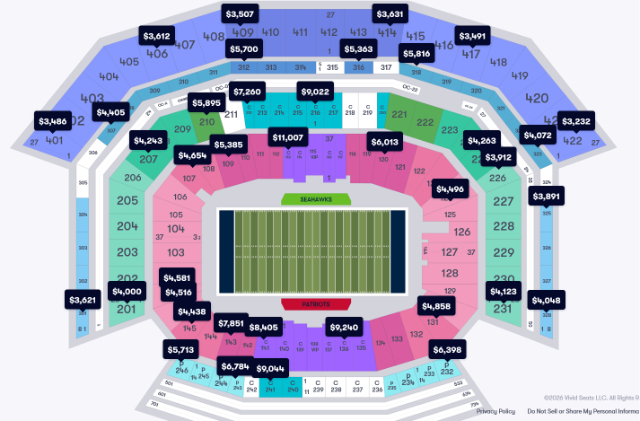
Unreal. I guess the only way I’ll see a Super Bowl live is if I hit the lottery. But I’ve been to The Game once, and the Sugar Bowl once, which included New Year’s in New Orleans, so that was kind of cool. And honestly, it’d take a lot for me to spend any kind of money on the Super Bowl. Like, the Saints would have to be playing, and that’s only happened once in my lifetime. Although, as I consider the changes they made on the team this last season, maybe we’ll see them in the playoffs in a year or two.
Oklahoma Civil Asset Forfeiture
There’s good news on the civil forfeiture front.
Governor Stitt signed an executive order last week regarding how civil asset forfeiture is recorded in the state. The order creates a state database where agencies are required to report any seizures. Further, agencies will be required to make annual reports to the Commissioner of the Department of Public Safety, who is then required to publish the information on a public website.
Previously, agencies had to keep track of their seizures, but there were no reporting requirements.
This is a huge step toward transparency with regard to asset forfeiture, and I think it’s going to help bring about further reforms. The problem right now is that the public doesn’t generally understand the process or realize how often it’s used or abused. One recent example that caught people’s attention involved the manager of a Christian rock band who got stopped by Muskogee County Sheriff’s deputies in February 2016. The music group had raised over US $53,000 for a nonprofit Christian school in Burma. MCSO seized the funds, though there was no evidence of any drug use, activity, or paraphernalia. After a couple of months, the Muskogee District Attorney finally released the funds. It necessitated getting help from the Institute for Justice in the form of a lawsuit against the sheriff’s office, though.
As local media covered the story, though, people were surprised to learn about the practice of asset forfeiture. They’d heard about it in relation to big-time drug lords, but had no concept of how it was being used and abused at the local level (archived here).
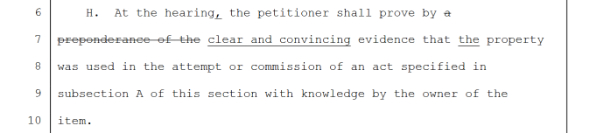
In even better news, the legislature is trying to codify a change as well. House Bill 3283 would change the burden of proof from a preponderance of the evidence to “clear and convincing evidence.” Ideally, I’d like to see a requirement that forfeiture can’t be invoked unless someone is found guilty of a corresponding crime, but that will take a while.
Bring Out Your Dead!
Who should be allowed to sell caskets?
Three states—Oklahoma, South Carolina, and Virginia—currently require anyone selling caskets to the public to be a licensed funeral director. In Oklahoma, the business is also required to be a funeral home.
Those requirements tripped up Caskets of Honor, an Oklahoma small business that buys caskets wholesale, then applies vinyl graphics per customer order.
In 2021, an investigator from the Oklahoma Funeral Board caught Candi Mentink and her husband, Todd Collard, at the Tulsa State Fair. They were fined US $4,000 plus costs. They’ve established a place of business across the border in Texas, what their attorney calls a “legal Rube Goldberg machine.”
They’ve filed a lawsuit against the Oklahoma Funeral Board to get the rule changed, and I support them. The state board says they’re neutral with regard to any legislative change to the laws. The Oklahoma Funeral Directors Association thinks anyone selling “any funeral service merchandise” should be licensed. OKFDA’s statement regarding the issue is long on hyperbole and short on any explanations about why applying vinyl graphics requires two years of schooling and a year of apprenticeship. This law only protects the funeral industry. Absolutely, the buying public needs to be protected. But requiring this level of licensing isn’t the way to do it.
The Institute for Justice, which has successfully fought similar laws in other states, is assisting Caskets of Honor. The fight has been going on for years. Let’s hope it gets somewhere this time.
The soundtrack for most of this post has been Ch 24 – xmplaylist.com on Spotify, inspired by Radio Margaritaville on SiriusXM. If you like the idea of SiriusXM but can’t afford it, check out XMPlaylist.com. They create Spotify and Apple Music playlists for most of the regular SiriusXM channels.
Thanks for reading. Feel free to share a thought in the comments. Sign up for my infrequent newsletter here. Find some of my other writing at The Good Men Project, too. Subscribe to the blog via the link in the right sidebar or follow it on Mastodon. You can also add my RSS feed to your favorite reader.
Share your thoughts!