This post is part of the Wednesday Weekly Blogging Challenge, hosted by Long and Short Reviews. Check out other bloggers at this week’s post.
What fictional things am I glad aren’t real?
Time travel.
Yeah, I went there (or is it then?).
It’s always been a given that even if you can travel back in time, you can’t change history. “The Moving Finger writes; and, having writ, Moves on,” for example.
And that’s a good thing, I think. The consequences of a seemingly minor change in history, like getting someone admitted to art school in 1907 can be far-reaching. “No Hitler means no Third Reich, no World War II, no rocketry programs, no electronics, no computers, no time travel.”
Talk about your paradoxes.
What would even happen to a time traveler in that situation? Would they be stranded in the wrong time? Because without time travel (which is lost because we didn’t have the computer revolution brought about by World War 2), they can’t get back to their own time. Would they wink out of existence? Because without time travel, they couldn’t even get to 1907 Vienna in the first place.
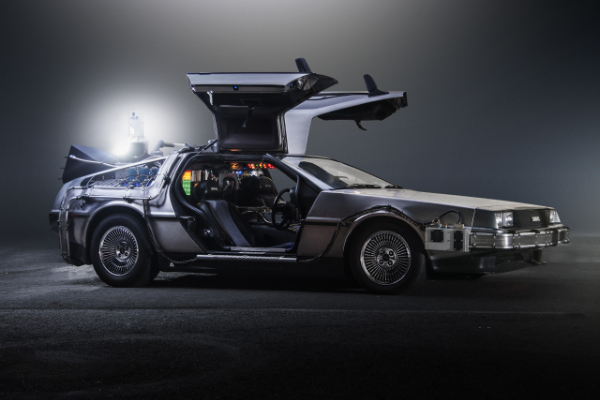
That’s an ongoing problem in the Back To The Future franchise. Marty changes history and he starts fading out of existence as things get rewritten, so he has to put right what he accidentally changed.
On The Other Hand
If one looks at time travel through the Marvel Cinematic Universe lens, though, it’s less clear what might happen. Under the MCU’s time travel rules, when the past or future is changed, it diverges from the main timeline into an alternate one, effectively creating a parallel universe. In that case, sending our young Austrian friend to art school in Vienna wouldn’t change our “sacred timeline” where the technology for time travel exists. Rather, it would create a new timeline with all of the technological changes inherent to a lack of major world conflict.
That’s not to say that a new timeline would be good or bad. Consider that of the millions lost in the Holocaust, there surely must have been some amazing minds. Doctors. Scientists. Writers. Musicians. What could they have created or written or discovered? Would computer technology have been developed sooner or faster?
Could we have had a different conflict?
Would nuclear weapons have come into play sooner? Or not at all?
But What If?
Let’s go back to the “old” version of time travel, and let’s consider that someone succeeds in killing Hitler.
No world war. No electronics advances. No computers. No time travel.
You’re stuck in the early 20th century with no way to return to whatever your original time is.
But you’ve still got all that knowledge you accumulated over the years. Sure, some of it’s rendered useless because no one cares about the atomic bomb at this point. Or at least they probably wouldn’t.
But you’ve got general knowledge about germ theory and penicillin and other antibiotics. Could you hasten medical research?
What about making a lot of money by investing in the right companies? Could you profit from the 1929 Stock Market Crash? Or better still, head it off?
And what about World War 1? Could you get to Sarajevo in 1914 and prevent the assassination of Archduke Ferdinand?
Speaking of Germ Theory
This is the thing that really makes me nervous.
Last week, I talked about the Crichton story, Timeline, where one of the characters gets sent back to the heart of the Black Death plague and gets sneezed on almost immediately. The implication is that he dies there in 1348 because, aside from anything else, he’s lost access to his recall device.
Yes, these days we’ve got vaccines for all three version of the plague, as well as smallpox, measles, Ebola, and a number of other diseases.
But infectious diseases mutate.
These days, we know of four types of influenza. What if there were another type? Or two? Maybe they existed hundreds of years ago, but died off. But we couldn’t vaccinate time travelers against them because we don’t know about them.
Ditto pneumonia. Heck, we could even find another type of plague that we didn’t know about. Imagine a time traveler bringing something like that back.
And what about carrying germs in the other direction?
People in the 1700s wouldn’t have developed immunities like we have today. A traveler might carry norovirus back and wipe out an indigenous tribe. We could try to sterilize people and their gear before they depart this era, but no such treatment could be perfect and eradicate every single “bad” cell, especially when we don’t know which cell would be bad. Consider the possibility that someone travels back a hundred years or so, carries a modern disease back, and in the process, causes the death of someone whose descendants created time travel.
Oopies.
In The End
That’s an odd heading for a time-travel post, isn’t it?
It’s a fascinating idea. I’d love to see the research and discoveries that we’d find as a result of time travel. But I’m more than a little paranoid about the risks.
Thanks for reading. Feel free to share a thought in the comments. Sign up for my infrequent newsletter here. Find some of my other writing at The Good Men Project, too. Subscribe to the blog via the link in the right sidebar or follow it on Mastodon. You can also add my RSS feed to your favorite reader.
1 Comment
I enjoyed reading this, Bob! 😀