To soothe everyone’s concerns, it wasn’t me who died Friday. It was the other Robert Mueller.
It’s sort of a joke, but back in 2018 during his work as Special Counsel, I was getting hammered on Twitter because people didn’t understand the difference between “at-ing” someone and hashtagging. They’d mean to type #RobertMueller, but they’d end up getting @bobmueller.
Then there was the person who apparently searched for “Contact Bob Mueller,” found my Contact page with a photo, and still messaged me through the page.
They’d even tag my Facebook page.
I assume that’s over now. I wish his family peace.
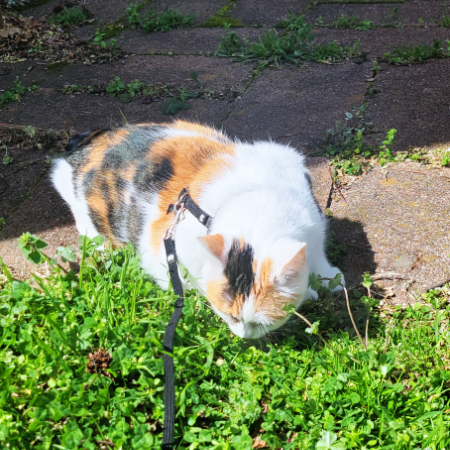
The Outside
We’ve had a harness for Sif for years but she’s never really shown much of an interest in The Outside. She’s usually quite content to watch The Outside Channel through the window. She doesn’t even really alert at squirrels or birds.
A week or so ago, I carried her around a bit outside when it was really nice.
The next day she acted like she wanted to go out again, so I put the leash on her and we wandered around the driveway and took a few steps into the backyard.
Tuesday, when I had Athena out, Diana said Sif was walking between the door and the sunroom. Meowing.
When I brought her back in, she jumped up on the bench in the dining room, waiting for her treat. Because Athena gets treats when she goes out.
We’ve created a monster.
A Different Kind of AI Problem
Who’s at fault when a law enforcement AI program misidentifies you?
What responsibility do investigators have to interview a suspect after their arrest?
Angela Lipps was arrested by US Marshals on July 14, 2025, on fugitive from justice charges. The Fargo, ND, police department had obtained warrants for her arrest for bank fraud. They’d used an AI-guided facial recognition program on bank surveillance footage to make the identification.
She’d never been to North Dakota. Until the cops flew her there, she’d never been on an airplane.
She sat in a Tennessee jail for four months before Fargo officers picked her up on October 30.
Arraigned on October 21, she remained in jail on $100,000 bond.
On December 19, she and her attorney met with a Fargo detective for the first time.
158 days with seemingly no investigation by the arresting agency.
My guess is that any lawsuit against any involved agency will be thrown out because of qualified immunity, that legal fiction that makes it so difficult to sue cops.
You can read international coverage at The Guardian or local coverage here and here.
There’s a GoFundMe, set up by an unconnected man in Fargo. It hit the original goal within a few days, so they’ve raised the goal.
The whole thing is shameful. She lost her house, her car. Her dog. Yes, through the generosity of strangers, she’s getting some money, so she might regain some semblance of her life before this fiasco. But what of the stuff she lost? Years of memorabilia. Personal documents, the lack of which are affecting her ability to gain access to the funds from that GoFundMe.
Cops and prosecutors need to remember that those names in a file are real people.
Life After Wrongful Conviction
It’s 2006. George W. Bush is president. The Longhorns beat the Trojans in the Rose Bowl, and the Steelers beat the Seahawks in the Super Bowl.
The iPhone isn’t yet released.
The Winter Olympic just wrapped up in Turin, Italy with the US taking 25 medals including 9 golds.
The Iraqi Civil War kicks off.
The Mars Reconnaissance Orbiter arrives at the red planet and begins its work. Pluto is redefined as a dwarf planet.
Google buys YouTube. Cars and Pirates of the Caribbean: Dead Man’s Chest are released.
Office 2007, PlayStation 3, and the Wii are released.
The Democratic Party sweeps the midterm elections.
The F-35 makes its first flight.
Saddam Hussein is executed.
And you just got arrested for a crime you didn’t commit.
After decades of jail, court hearings, more jail, then prison, you get released twenty years later, in 2026. “A lot had changed in the world while you were locked up. How have you been adjusting?”
“I haven’t.”
Far too often, we throw money at the wrongfully convicted and move on with our own lives, secure in our belief that we’ve done something useful.
But what happens to the people behind those stories?
In partnership with StoryCorps Studios, the Innocence Project has recorded more than 30 intimate conversations about wrongful conviction. The videos include exonerees, their children, childhood friends, their attorneys, siblings, and spouses. It’s sobering and powerful.
There’s a YouTube playlist of short clips from each interview, or you can work your way through the full-length videos here.
Thanks for reading. Feel free to share a thought in the comments. Sign up for my infrequent newsletter here. Find some of my other writing at The Good Men Project, too. Subscribe to the blog via the link in the right sidebar or follow it on Mastodon. You can also add my RSS feed to your favorite reader.
Share your thoughts!